
When a cyberattack shuts down the cold chain
· By Antonio Sedino, CTRO · Reinventy Solutions Corp.
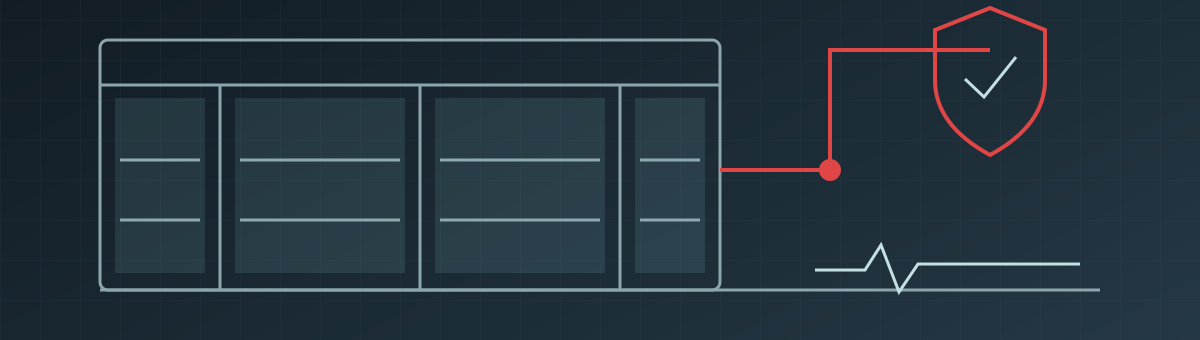
Compromised refrigeration systems reveal a deeper weakness: we have connected equipment without always building continuous protection around it. AI can help close that gap—if it turns signals into evidence, controlled decisions and problems resolved.
Security moves beyond the screen
A cyberattack becomes immediately understandable when it stops affecting a screen and starts changing the temperature of an installation. In the cold chain, a digital alteration can have physical consequences: goods requiring inspection, operations interrupted, people forced to make decisions quickly. Network security becomes part of everyday business continuity.
On 12 October 2026, CERT-FR issued an alert about compromised remote controllers for refrigeration installations. Updated on 16 October, the document names the Danfoss AK-SM and AK-SC, Copeland xweb and Dixell xweb families. Its recommendations include removing direct Internet exposure, using protected networks for access, applying updates and replacing default passwords. This is a documented problem, not a conference scenario.
My reading is that these incidents raise an uncomfortable question: how much of our business has become remotely accessible without, at the same time, becoming genuinely monitored?
https://cert.cyber.gouv.fr/alerte/CERTFR-2026-ALE-012/
The forgotten password is a symptom, not the whole diagnosis
Leaving factory credentials in place, sharing an account across installations or retaining maintenance access longer than necessary are weaknesses that must be eliminated. Understanding why does not require an advanced model. It does require an organisation able to notice them, assign responsibility and verify that they have been addressed.
It would be equally wrong to reduce every refrigeration attack to an unchanged password. In research published on 9 August 2026, Claroty Team82 documented vulnerabilities in the Danfoss AK-SM 800A management interface, including an authentication-bypass path. The manufacturer collaborated on remediation. That research does not automatically identify the cause of every subsequent incident; it does show why correct credentials and updated software address different risks.
The organisational problem often lies in the distance between those who purchase, install and maintain equipment and those accountable for security. A connection is created to enable remote support; years later, it may still be active while people, suppliers and responsibilities have changed. Serious defence must reconstruct that context as well as inspect the device.
Company size is not enough to provide protection
A shop with a small team may have nobody assigned to read network alerts. Its owner already has customers, suppliers and staff to manage: expecting that person to become a security analyst as well is not a sustainable solution. Protection must fit that setting, with understandable guidance, planned maintenance and an accountable point of contact.
A large organisation faces a different problem. It may have strong expertise and procedures, yet must extend them to branches, installers, inherited systems and suppliers’ access. A central policy is only as effective as its application at the most distant location. Complexity does not cancel the advantage of resources; it demands verification that those resources actually cover the operating environment.
For both, the first useful question is concrete: do we know the equipment that supports operations, who can reach it and which connections are essential? Without that map, even the best alert may describe something nobody knows how to manage.
AI changes the pace of attack
In its Annual Review published on 3 November 2026, the UK National Cyber Security Centre assesses AI as a multiplier of the speed, scale and efficiency of hostile operations. Adoption remains uneven and human involvement remains important. The risk described is primarily an acceleration of existing techniques, alongside a growing gap between organisations able to adapt their defences and those unable to do so.
The sources cited here do not establish that these specific attacks on refrigeration systems used AI. Connecting those events to the evolving threat is a strategic argument, not a technical attribution of the incidents.
The conclusion I draw is nevertheless clear: we cannot design business security as though there were unlimited time to understand and respond. Bringing AI into defence makes sense when it reduces the work needed to connect clues, assess priorities and prepare an intervention. Its value is not the presence of a chat interface; it is the quality and timeliness of the process the technology makes possible.
https://www.ncsc.gov.uk/collection/annual-review-2026/understanding-threat/ai-impact-cyber-threat
The first line means seeing before damage occurs
Prevention starts even before an alert exists. An agent should help keep exposures visible, detect changes from authorised configurations and highlight checks that remain unanswered. It cannot infer a weak password simply by observing encrypted traffic: establishing that requires authorised checks or configuration information. It must distinguish what it has observed from what needs investigation.
During operation, its contribution becomes correlation. Out-of-hours access, a new destination and a change in equipment behaviour may deserve attention together, even if each has a legitimate explanation on its own. A model can help the operator interpret this sequence; reliability depends on the available data and on how the hypothesis is tested.
I would describe a system as predictive only in relation to a defined, measured task. Estimating how an operational quantity will evolve is not the same as knowing an attacker’s intentions. Anticipating a risk is useful even without announcing the future: it can mean finding an exposure today, before someone exploits it tomorrow.
A refrigeration system, unusual access, a proportionate decision
Consider an illustrative scenario, not a reconstruction of any incident cited here. At a retail location, the refrigeration supervisor is accessed through a maintenance route at an unusual time. Shortly afterwards, an authorised integration with the management system records a configuration change. A network sensor alone might not see what changed: connecting the events also requires application logs.
The agent should collect observations, verify their timing and compare them with permitted access and scheduled work. If the maintenance provider’s schedule is unavailable, it must say so. A missing fact cannot become narrative certainty. The question put to the operator must be understandable: was this intervention planned, by whom and on which equipment?
The response should not be indiscriminate shutdown. In an industrial setting, a cybersecurity measure can itself cause operational harm. Any temporary restriction on the maintenance route requires an approved policy, a precise scope, an impact assessment and a restoration procedure. Local equipment control and essential functions must be considered explicitly.
The expected outcome is a proportionate decision: notify, investigate further or apply a permitted intervention, preserving the evidence. A useful agent must know when to refrain from action because evidence or authority is insufficient.
From a clue to a resolved problem
ILLUSTRATIVE SCENARIO / NOT A REAL INCIDENT
- 01 · Observe — Access, logs and changes. State the origin and limitations of the data.
- 02 · Verify — Compare with authorised work and the criticality of the equipment.
- 03 · Contain — Only permitted, proportionate and reversible actions. Protect essential services.
- 04 · Correct and recheck — Assign responsibility for the cause. Verify the solution and monitor for recurrence.
Requesting a change does not prove it was carried out. Containment does not certify that the cause has been removed.
Blocking an attack does not mean resolving the problem
This is, in my view, one of the most important opportunities. An incident can become the moment a company discovers a structural weakness: a shared account, access left open, a device without updates or responsibility that was never assigned. If the system merely displays ‘attack blocked’, that weakness may remain.
Containment must therefore initiate corrective work. What cause needs checking? Who must act? How urgently? What evidence will demonstrate that the problem has been removed? The agent can assemble the picture, support verification and check that the exposure does not return. It must not declare a change complete merely because it requested it.
CERT-FR also warns that a factory reset alone does not resolve the problem of equipment that remains vulnerable and exposed. The broader lesson is that restoring service and removing the cause are distinct outcomes. The defensive cycle closes only when both are verified.
https://cert.cyber.gouv.fr/alerte/CERTFR-2026-ALE-012/
Hardware and models exist. The work is turning them into defence
Processing close to equipment offers an interesting direction: analyse the necessary data locally, limit what must leave the site and keep some functions independent of cloud availability. These are architectural objectives, not automatic guarantees. The appliance must remain maintainable, manageable and reliable even when one of its components stops responding.
Within Cerbero, we are evaluating distinct roles for NVIDIA technologies: Nemotron to interpret evidence through a local engine such as TensorRT Edge-LLM, and Kumo Forecast for temporal analysis. NVIDIA’s documentation describes the latter as a multivariate forecasting model; it does not present it as proof that an attack can be predicted.
Cerbero is a Reinventy product in development. A software core and component-level tests exist, while final model integration, appliance behaviour and preventive capabilities in the field require qualification. The architectural principle is to separate observation, analysis and authority to intervene. A language-model response must not be able to rewrite network rules freely.
That work also requires protecting the agent itself: limiting privileges, treating logs and external content as untrusted data, recording actions and defining behaviour on failure. Inserting a model without these precautions risks adding a new attack surface precisely where stronger protection was intended.
https://github.com/NVIDIA/TensorRT-Edge-LLM
https://nvidia.github.io/structured-data-models/api/generated/sdm.models.KumoForecast.html
Defence the business can actually use
For a small company, innovation must translate into a few concrete things: knowing what is exposed, receiving an understandable alert, having someone accountable and seeing whether the problem has been resolved. For a distributed organisation, it must enable comparisons across locations and suppliers without losing local detail. In both cases, accumulating notifications is not the same as building effective oversight.
I would measure value through operational questions: how long does it take to assign a weakness to someone responsible? How many alerts prove unfounded? How many corrections are verified? Did an intervention interrupt an essential service? Has a previously closed vulnerability returned? These questions are less eye-catching than a promise of invulnerability, but far more useful to people who must keep a business running.
Correct credentials, segmentation, updates and controlled access remain essential. The challenge is to complement them with tools that interpret events faster and help people respond better. AI can become a first line of continuous attention; it must not become an excuse to abandon the foundations.
Attacks on refrigeration systems remind us that digital technology is already embedded in the physical operation of businesses. Defence must enter that world just as concretely: close to equipment, within procedures and through to verification of the correction. It is along that path, from a clue to a resolved problem, that I see the most important role for an enterprise AI agent.
Antonio Sedino
CTRO · Reinventy Solutions Corp.
Author’s disclosure
An analysis and opinion article by the CTRO of Reinventy Solutions Corp., the company developing Cerbero. References to the project reflect its development status; this article does not claim effectiveness that has yet to be demonstrated.
Sources and further reading
https://cert.cyber.gouv.fr/alerte/CERTFR-2026-ALE-012/
https://www.ncsc.gov.uk/collection/annual-review-2026/understanding-threat/ai-impact-cyber-threat
https://github.com/NVIDIA/TensorRT-Edge-LLM
https://nvidia.github.io/structured-data-models/api/generated/sdm.models.KumoForecast.html
https://herald.reinventy-solutions.ca/weekly-editorial/cerbero-un-agente-ia-sulla-soglia-della-rete
https://reinventy-solutions.ca/it/platforms/cerbero